First Blood Font: A Handwritten Typeface for Branding
I still remember the afternoon I sat in my small studio, surrounded by stacks of blank kraft paper boxes and a roll of matte sticker labels. My client, a local artisan who makes small-batch soy candles, had just handed me her new product line. The scents were incredible—smoky cedar, wild lavender, and burnt orange—but the branding felt disconnected. She was using a stiff, corporate-looking serif font that clashed with the warm, organic nature of her products. It looked like it belonged on a law firm’s letterhead, not on a hand-poured candle meant to bring comfort to a living room.
We needed something that felt human. Something that looked like it had been touched by a hand, not just generated by a machine. That is when I pulled up First Blood, a casual, fun handwritten font from Script Amp. As soon as I typed out the scent names, the entire vibe of the packaging shifted. The stiffness vanished, replaced by a clean, quirky energy that felt authentic and inviting. If you are a small business owner, a crafter, or anyone trying to build a brand identity that feels approachable yet polished, this typeface might be the missing piece in your design toolkit.
Why Handwritten Typography Matters for Small Businesses
In the world of modern typography, there is a constant tug-of-war between perfection and personality. Clean sans serif fonts are safe; they are readable and professional. But for many small businesses, especially those in the handmade, boutique, or lifestyle sectors, "safe" can sometimes feel cold. Customers today are looking for connection. They want to know there is a person behind the product. This is where a premium font like First Blood shines.
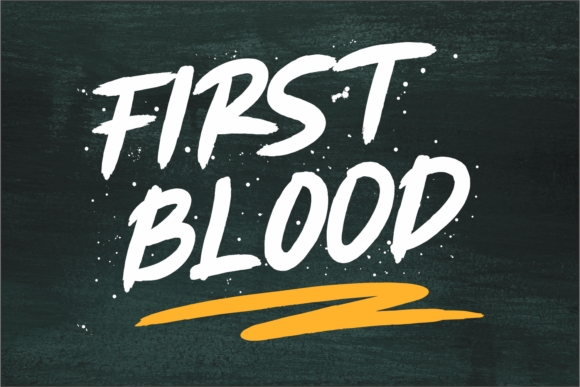
First Blood is created using a brush pen, which gives it that genuine handwritten texture without the messiness of actual ink smudges. It strikes a delicate balance. It is clean enough to be legible on a small label, yet quirky enough to stand out in a crowded social media feed. When you use a creative font like this for your logo design or packaging design, you are signaling to your customers that your brand is friendly, accessible, and crafted with care. It transforms a generic product into a memorable experience.
Putting First Blood to the Test on Real Materials
Theory is nice, but does it work in the real world? I decided to test First Blood across several different applications to see how it held up. Here is what I found when applying it to actual business materials.
- Product Labels and Packaging: This is where First Blood truly excels. I used it for the candle jar labels. Because the font has a consistent weight and clear letterforms, it remained readable even when printed at a smaller size. It didn’t look cluttered. For a bakery updating their box designs, this font would be perfect for writing flavor names like "Salted Caramel" or "Blueberry Lemon." It adds a decorative accent that feels personal.
- Social Media Graphics: In the fast-paced world of Instagram and TikTok, you have seconds to grab attention. I created a series of quote graphics and promotional banners using First Blood. The handwritten style stops the scroll because it looks less like an ad and more like a note from a friend. It works beautifully for short phrases, headlines, and call-to-action buttons.
- Thank-You Cards and Stationery: There is nothing quite like receiving a handwritten note. Using First Blood for printed thank-you cards mimics that personal touch. It makes the customer feel valued. Whether you are a boutique owner sending tags with clothing purchases or an online seller including a note in a shipment, this font adds warmth.
Readability and Practical Design Advice
One of the biggest risks with script fonts and handwritten fonts is readability. If a customer cannot read your product name, you lose the sale. First Blood manages to avoid this pitfall through its clean structure. The letters are distinct, and the spacing is generous. However, as a designer, I always advise caution with display fonts.
For best results, use First Blood for headlines, logos, and short titles. It is not designed for long paragraphs of body text. If you are designing a menu for a café, use First Blood for the item names and prices, but pair it with a simple, clean sans serif font for the descriptions. This creates a visual hierarchy that guides the eye. On mobile screens, ensure the font size is large enough. While it is legible, tiny handwritten text can become difficult to decipher on small devices. Always test your designs on both desktop and mobile views before finalizing your web design or digital ads.
Pairing First Blood with Other Typefaces
A great brand identity relies on consistency, and part of that is knowing how to mix fonts. First Blood is versatile, but it plays best with supporting actors that do not compete for attention. Here are a few pairing ideas that work well for various industries:
- With a Modern Sans Serif: This is the safest and most popular choice. Pair First Blood with a geometric sans serif for a contemporary, clean look. This works wonders for tech startups, coaching brands, or modern boutiques. The contrast between the organic handwritten style and the structured sans serif creates a balanced, professional aesthetic.
- With a Classic Serif Font: For a more elegant, editorial design feel, try pairing it with a traditional serif font. This combination is excellent for wedding invitations, high-end skincare labels, or luxury gift shops. The serif adds sophistication, while First Blood adds a touch of whimsy and approachability.
- With a Minimalist Script: If you need a secondary accent, a very thin, minimal script can work, but be careful not to make the design too busy. Usually, letting First Blood be the star and using a plain font for everything else is the stronger move.
Technical Details and Licensing Considerations
Before you download any commercial font, it is crucial to check the technical specifications and licensing terms. First Blood comes as part of the Script Amp collection, known for high-quality design assets. When evaluating this font for your business, check the included file formats to ensure compatibility with your design software, whether you are using Adobe Illustrator, Photoshop, or Canva.
Also, consider the commercial font licensing. If you are creating products for sale, such as t-shirts, mugs, or physical packaging, you need to ensure your license covers commercial use. Most premium fonts from reputable creators like Script Amp offer clear licensing options for small businesses and enterprises. Additionally, check if the font includes alternates or ligatures. These extra characters can add variety to your logo design and prevent your branding from looking repetitive. While First Blood is relatively straightforward, having access to these design assets allows for greater creativity in your brand identity.
Ultimately, typography is more than just choosing pretty letters. It is about communication. First Blood communicates warmth, creativity, and authenticity. For the candle maker, the baker, the boutique owner, or the content creator, it offers a way to stand out without shouting. It is a tool that helps you look polished and consistent, turning casual browsers into loyal customers. If you are ready to refresh your brand visuals, giving this handwritten gem a try might be the first step toward a more connected and memorable business presence.